BIM-Integrated Modular Engineering

China Wholesale Prefabricated Steel Structures Exporter & Exporters

Delivering High-Performance, Precision-Engineered Industrial warehouses, Commercial Complexes, and Specialized Modular Housing Complexes Worldwide.

Global Authority Whitepaper

Decoding the Prefabricated Steel Structure Supply Chain

The global construction sector is undergoing a rapid transition towards DfMA (Design for Manufacture and Assembly) methodologies. Heavy industry, warehousing, and commercial housing no longer rely solely on site-welded configurations. Instead, they leverage the dimensional tolerance, material optimization, and seismic resilience of Prefabricated Structural Steel Systems.

As a leading hub for structural steel production, China-based manufacturers like Foshan Nova Build Co., Ltd. represent the nexus of advanced metallurgy, digital twin modelling (BIM LOD 400), and economies of scale. Understanding how to navigate this supply chain is critical for international EPC (Engineering, Procurement, and Construction) companies, project developers, and wholesale procurers.

The Foshan Nova Build Standard

Foshan Nova Build Co., Ltd. is a professional China modular steel structure manufacturer specializing in the design, engineering, manufacturing, and supply of high-quality prefabricated building solutions for global customers. With years of industry experience, the company has established itself as a reliable partner for industrial, commercial, and residential construction projects worldwide.

Leveraging advanced manufacturing technologies and strict quality control systems, we offer a comprehensive range of modular steel structure products, including prefabricated steel buildings, modular office buildings, warehouse structures, accommodation camps, commercial buildings, and customized steel construction solutions.

One-Stop Customization

From structural analysis to manufacturing, packaging, and logistics coordination, we provide comprehensive services to ensure smooth project execution and timely delivery.

Certified Compliance

Engineering to global design specifications: AISC, Eurocode 3, AS/NZS 1170, and CE marking protocols. Rigid structural safety and execution standards.

Global Distribution

Optimized logistics and container loading layouts reduce shipping volume. Over years, we have built key client networks spanning Americas, Europe, MEA and Asia.

The Engineering Advantages of China's Steel Fabrication Plants

Procurers often compare domestic fabrication to importing from Chinese wholesale exporters. While localized manufacturing appears to offer convenience, it often falls short of the speed, engineering precision, and raw material integration native to specialized clusters in regions like Foshan. Below is a structural analysis of the specific factors driving these advantages:

  • High-Strength Structural Steel Grades: Access to premier domestic mills offering ASTM standard A36, A572 Grade 50, and GB equivalent Q355B and Q420 structural steel, ensuring structural integrity while minimizing weight.
  • Automated Submerged Arc Welding (SAW) Lines: Precision welding ensures maximum load-bearing capability for H-beams, box columns, and truss structures, complying with AWS D1.1 (American Welding Society) and EN 1090 standards.
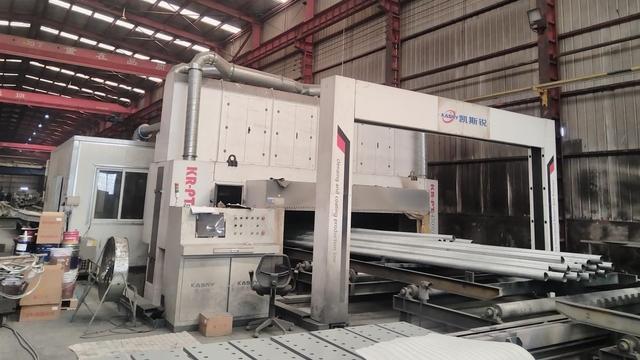
  • Advanced Corrosion Mitigation: Surface treatment options including shot blasting to Sa 2.5 cleanliness, followed by multi-coat epoxy primer applications or Hot-Dip Galvanizing (HDG) conforming to ISO 1461, ensuring life expectancies beyond 50 years.
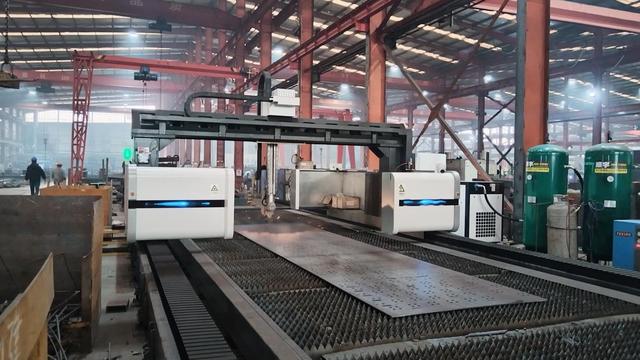
  • High Dimensional Tolerance via CNC Machining: Modern plants utilize multi-axis CNC drilling, cutting, and sawing machines linked to Tekla Structures outputs. Structural connection tolerances are held within +/- 1.5mm, ensuring seamless layout fitment on site.

Future-Proofing Construction

Global trends indicate a substantial shift toward high-rise pre-engineered structural frames, modular spaces, and highly dynamic, green structural layouts.

Structural Steel Innovation & Sustainability

Foshan Nova Build Co., Ltd. continuously develops energy-efficient and environmentally friendly building solutions that help customers reduce construction time, labor costs, and material waste. Our modular systems are engineered to reduce carbon footprints, offering 100% recyclable structural framing. Steel structures present an inherent advantage in high-seismic regions due to their high ductility and structural flexibility, absorbing and dissipating seismic energy far better than conventional cast-in-place concrete.

Key Industry Trends in Modular and Prefabricated Steel

As the construction landscape evolves, several key advancements are shaping how prefabricated structures are engineered and shipped globally:

  • Integration of Digital Twins & BIM: Building Information Modeling (BIM) allows engineers to visual and stress-test structures digitally. This eliminates field modifications, ensuring every bolt hole, plate interface, and service utility conduit aligns flawlessly.
  • Thermal and Acoustic Enclosure Upgrades: Modern PEBs (Pre-Engineered Buildings) feature high-performance wall cladding, utilizing PIR (Polyisocyanurate) and Rockwool sandwich panels with advanced interlocking joints for zero thermal bridging.
  • Hybrid Structures: The integration of prefabricated light-gauge steel framing with hot-rolled structural moment frames provides high structural stiffness for mid to high-rise projects.
Performance Metrices

Foshan Nova Build Capacity & Capabilities

Backed by modern production facilities, professional technical teams, and globally certified raw materials.

100% BIM Modelled Projects
Q355B Premium Steel Grade
Sa 2.5 Shot-Blasting Finish
AWS D1.1 Welding Standard Compliance
Applications

Macro-Industry Engineering Solutions

From large scale storage to customized tourist cabins, explore the diverse applications of modular steel.

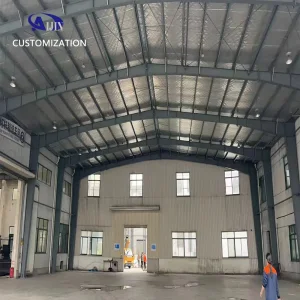
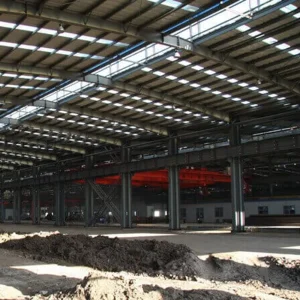
1. Industrial Manufacturing & Logistics Hubs

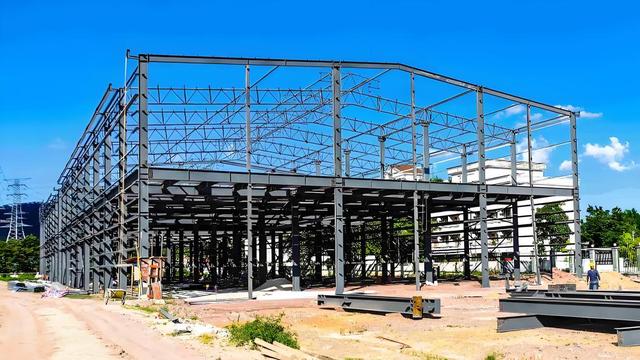
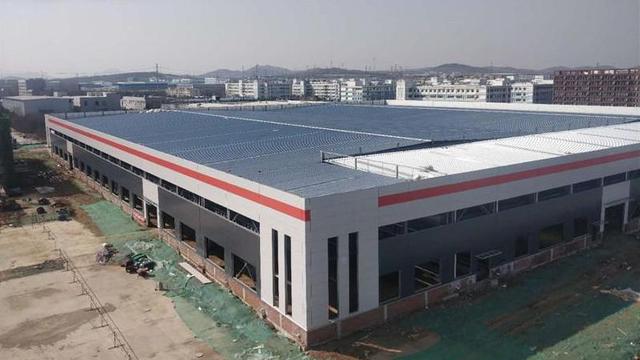
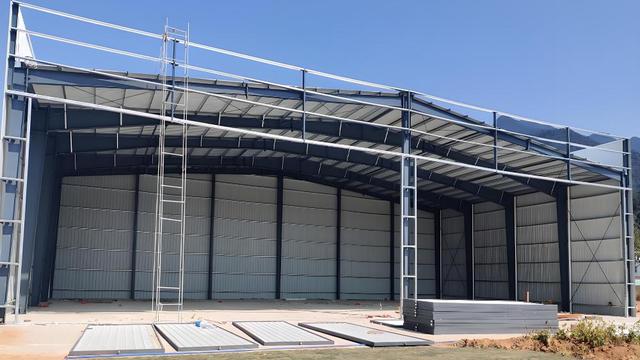
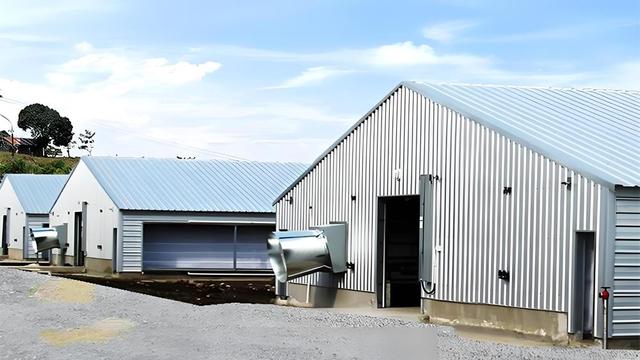
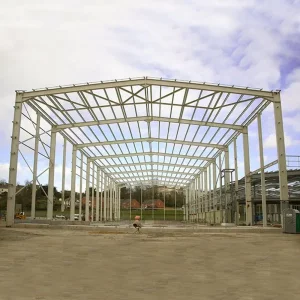
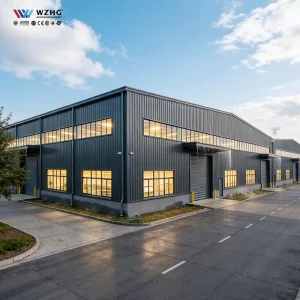
Heavy-duty Pre-Engineered Buildings (PEBs) built to support heavy overhead crane girders (up to 50+ tons capacity). Designed with clear span profiles exceeding 40 meters, optimizing floor plans for warehouse racking and assembly lines.

Key Features: Mezzanine floor integration, thermal insulated wall panels, high-clearance portals.

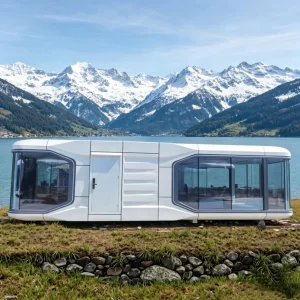
2. Eco-Friendly Space Capsules & Resorts

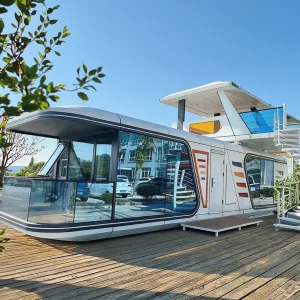
Ultra-modern modular accommodations tailored for rapid resort development. Built off-site with premium finishes, integrated smart-home automation systems, and high performance multi-layer exterior insulation panels.

Key Features: Fully wired utilities, fireproof structural core, weather-resistant outer shell.

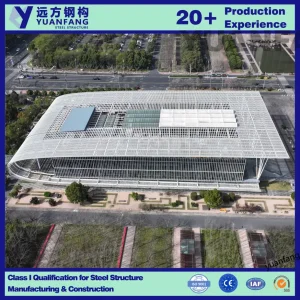
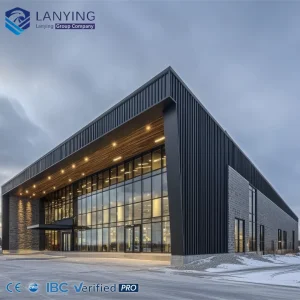
3. Multi-Storey Commercial & Office Frames

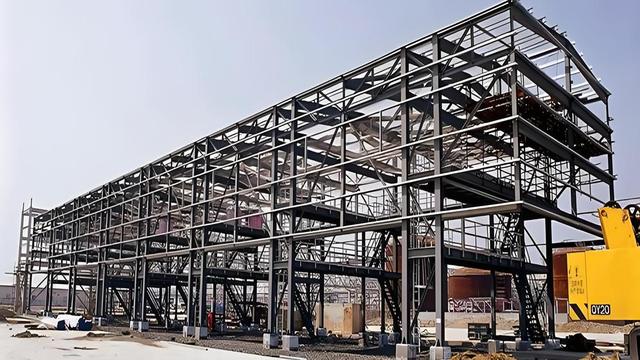
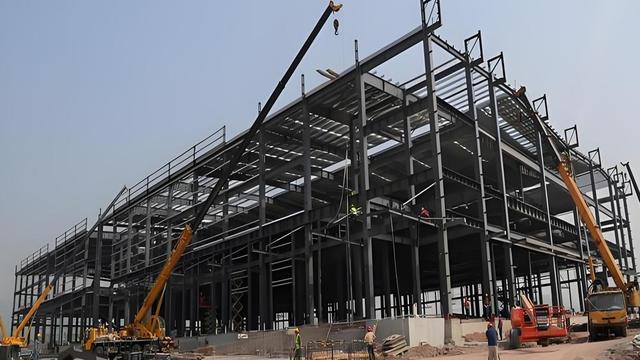
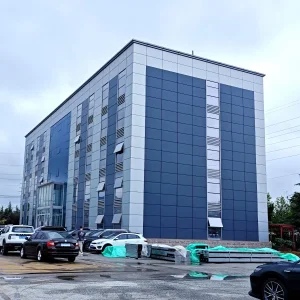
Moment frame construction systems utilizing heavy H-sections and box beams. Excellent choice for hotels, shopping malls, office buildings, and healthcare facilities that require rapid site erection and long span safety.

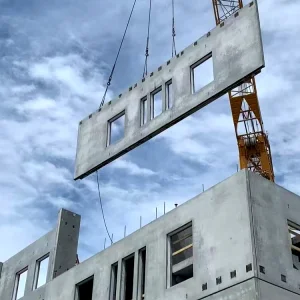
Key Features: Direct compatibility with precast concrete floor slabs, optimized MEP penetrations.

4. Remote Camps & Temporary Structures

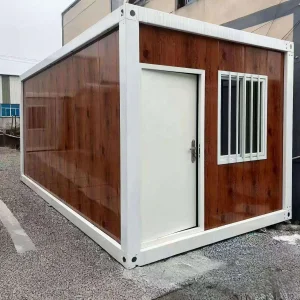
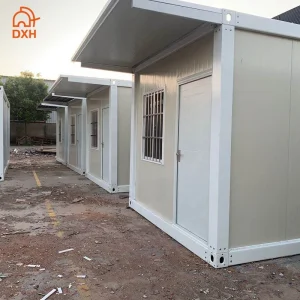
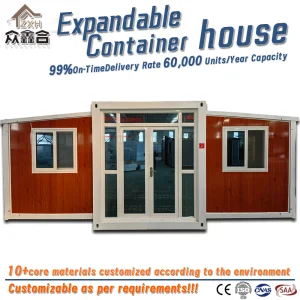
Foldable and flat-packed containerized housing designed for easy shipping. Perfect for mining campsites, disaster relief shelters, site offices, and mobile clinics requiring deployment within hours.

Key Features: Lightweight modular steel framing, bolt-together configuration, highly reusable.

Production Strength

State-of-the-Art Factory & Finished Projects

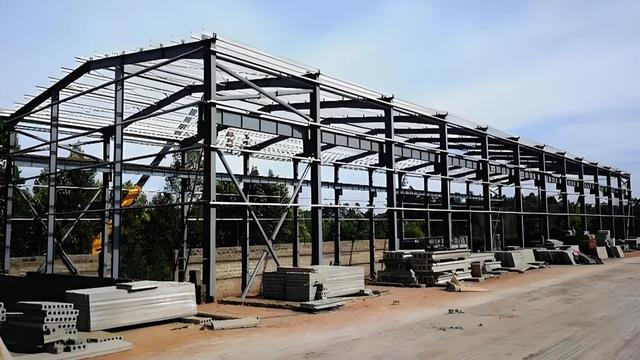
A look inside our advanced fabrication lines, quality inspection systems, and globally exported structural modules.
Strategic Procurement: Essential Factors for International EPC Buyers

Importing prefabricated steel structures requires deep technical alignment between structural designers in China and the regional code requirements of the destination country. To prevent customs issues, structural failures, or site alignment problems, consider the following technical checklist during the procurement scoping phase:

  • Structural Code Adaptability: Ensure the manufacturer can model calculations utilizing localized codes: AISC 360 (North America), Eurocode 3 (Europe), and AS/NZS 4100 (Oceania). Nova Build engineers use advanced FEA (Finite Element Analysis) tools to simulate local wind speed loads (up to category 5 cyclones), seismic accelerations, and live snow loading configurations.
  • Connection Design Specifications: High-strength structural bolts (such as ASTM A325 or A490) must be specified correctly for tension connections. Connection designs should clarify whether they are shear-bearing (snug-tight) or slip-critical (friction-grip) joints, which affects the surface prep of the connection plates.
  • Cladding and Envelope Selection: For food processing facilities or cold chain logistics, fire ratings (FM Approved / Class A) and R-value energy performance are vital. The thickness and core material (PU/PIR or high-density Rockwool) of structural sandwich panels must be engineered for optimum thermal envelope efficiency.
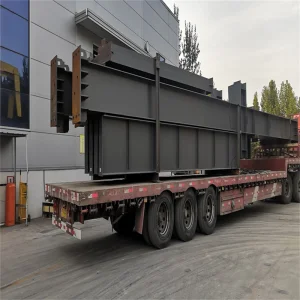
  • Shipping Volume Optimization: Steel structure components should be bundled to maximize space in 40ft OT (Open Top) or HQ containers. Proper packaging with soft contact points prevents mechanical abrasion to paint coatings during transit.

Our Global Service Workflow

Guided by quality, integrity, and client satisfaction, Foshan Nova Build Co., Ltd. has established robust delivery systems worldwide. Our professional process minimizes client risk:

Phase 1: Design & Modeling

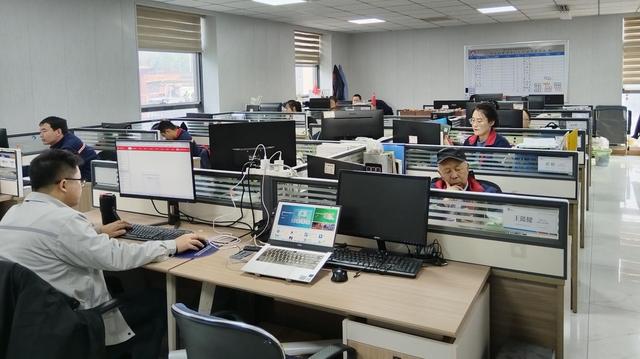
Using Tekla, AutoCAD, and SAP2000 to construct structural configurations. Collision checks are performed to ensure layout accuracy before steel fabrication starts.

Phase 2: Fabrication & QC

Steel cutting, welding, drilling, and shot-blasting. Non-destructive testing (NDT), including ultrasonic testing on critical welds, guarantees structural integrity.

Phase 3: Logistics Coordination

Custom packing plans are made to secure structural steel bundles in containers, minimizing shipping damage and facilitating organized site unpacking.

Phase 4: Site Installation Support

Detailed 3D assembly drawings, piece-marked structural components, and remote video/on-site engineering guidance simplify the final building erection process.

FAQ

Prefabricated Steel Structures Technical Q&A

Professional answers to key structural, engineering, and logistic questions asked by global developers.

Q1: Can Foshan Nova Build design structures matching local wind load and seismic codes?
Yes. Our engineering department uses structural design platforms (SAP2000, Tekla) to calculate wind velocity forces (up to 300 km/h) and seismic hazard maps based on destination specifications. We comply with American Standards (AISC/IBC), British Standards, Eurocode 3 (EN 1993), and AS/NZS codes. We supply calculation reports for structural engineering submittals.
Q2: What steel grades and corrosion protection options do you provide?
We use high-grade structural carbon steel like Q355B (equivalent to ASTM A572 Grade 50) and Q235B (ASTM A36). For corrosion resistance, we offer sandblasting to Sa 2.5 profile depth, followed by premium epoxy primer coatings or Hot-Dip Galvanization (HDG) conforming to ISO 1461, ensuring structural longevity in high-salinity coastal environments.
Q3: How are prefabricated components shipped, and how do you reduce freight costs?
We design structural steel elements to fit into 40ft HQ or Open Top (OT) shipping containers. Columns and trusses are modularized to limit empty shipping volume. Structural connections use heavy-duty bolted splice plates rather than long single members, significantly reducing total ocean freight costs.
Q4: Do you provide on-site assembly instructions or supervision?
Every structural component is labeled with a unique steel identification mark matching our comprehensive 3D erection drawings. We supply detailed assembly manuals and full engineering documentation. Additionally, we provide online technical assistance, and for large-scale projects, we can send supervisors to guide site workers.
Q5: What is the typical lead time for a custom warehouse structure?
Our engineering phase takes 1-2 weeks. After structural approvals, fabrication takes 4-6 weeks, depending on structure complexity. Shipping transit time depends on the destination port, generally ranging from 15 to 40 days.
Q6: How do you verify structural welding quality?
All welding operations follow AWS D1.1 and EN 1090 specifications. Our quality team performs Non-Destructive Testing (NDT), including Ultrasonic Testing (UT) and Magnetic Particle Testing (MT) on key structural welds, ensuring structural reliability under cyclical dynamic loads.