7 Best Reasons Why Modular Buildings Are Becoming Popular?

Time:2026-10-12 Author:Henry
0%

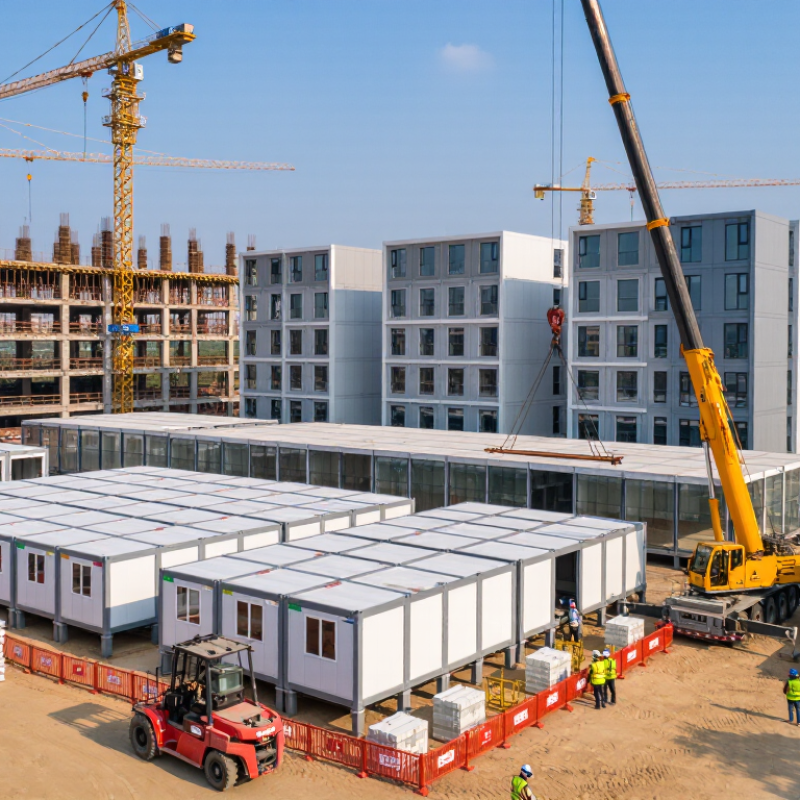
Why are modular buildings becoming more popular? The answer is visible on busy construction sites, where factory-built wall panels arrive clean, labeled, and ready for assembly. This approach can shorten project schedules, reduce material waste, and improve cost predictability. It also supports schools, healthcare facilities, housing projects, and temporary workspaces that need practical solutions.

Tom Hardiman, executive director of the Modular Building Institute, describes the method clearly: “Modular construction is a process in which a building is constructed off-site, under controlled plant conditions, using the same materials and designing to the same codes and standards as conventionally built facilities.” His statement highlights an important point. Modular buildings are not automatically lower quality. They still require skilled design, inspections, transportation planning, and careful site preparation.

The benefits are tangible. A factory team can install electrical systems under bright, consistent lighting, while another crew prepares the foundation outdoors. Weather may interrupt fewer tasks. Repeated designs can also improve efficiency. However, modular construction is not a magic fix. Poor coordination can create delays, especially when local approvals, delivery routes, or utility connections are overlooked.

There is room for improvement.

This article examines seven practical reasons behind the industry’s growth. It considers speed, sustainability, labor efficiency, safety, design flexibility, affordability, and long-term performance. Evidence from manufacturers, contractors, and building owners offers a more reliable view than promotional claims. The central question remains simple: why are modular buildings becoming more popular when traditional construction still dominates many markets? The answer involves measurable advantages, changing project demands, and a willingness to rethink how buildings are made.
7 Best Reasons Why Modular Buildings Are Becoming Popular?

What Modular Buildings Are and How They Differ from Traditional Construction

Modular buildings are constructed from factory-made sections called modules. Each module may include walls, floors, wiring, plumbing, insulation, and interior finishes. Workers build these units indoors, then transport them to the project site. Cranes place the modules onto prepared foundations. The process resembles assembling a precise three-dimensional puzzle.

Traditional construction usually happens outdoors, step by step, on one site. Weather can delay framing, roofing, and interior work. Modular construction moves much of that work into a controlled facility. This can improve quality checks, reduce material waste, and shorten the building schedule. It may also lower disturbance around schools, offices, or crowded urban sites. However, faster delivery is not guaranteed. Design approvals, transport permits, foundation work, and site preparation still require careful coordination.

The seven strongest advantages are speed, predictable workmanship, reduced waste, safer factory conditions, flexible layouts, lower site disruption, and potential cost control. Inspectors can examine repeated details before modules leave the facility. Moisture exposure is often easier to manage indoors. Yet modular buildings are not temporary by definition. Many use durable structural systems and meet the same local building requirements as conventional buildings. Transport dimensions can limit room sizes and unusual shapes. Late design changes may also become expensive after production begins. That weakness deserves attention. Good planning matters more than attractive promises.

Faster Project Delivery Through Off-Site Manufacturing

Modular buildings are becoming popular because off-site manufacturing can shorten project delivery. McKinsey Global Institute’s 2019 report, Modular Construction: From Projects to Products, estimates that modular methods may reduce construction schedules by 20% to 50%. The result depends on design discipline, logistics, and early coordination.

Factory production allows wall panels, floors, and service modules to develop simultaneously. Site crews can prepare foundations while indoor teams assemble building sections under controlled conditions. Rain becomes less disruptive.

Quality checks happen beside the production line, not only after installation. A truck may arrive carrying labeled panels, installed insulation, and tested connections. That physical sequence saves time.

The 2019 SmartMarket Report on Prefabrication and Modularization also identified schedule improvement as a leading benefit reported by construction professionals. Yet speed is not automatic. A late design change can interrupt factory production and create costly transport delays.

Teams must freeze key details early, verify tolerances, and coordinate lifting equipment. This is where practice matters. A faster method can still fail when planning is rushed.

Modular construction is efficient, but not effortless.

Lower Construction Costs and More Predictable Budgets

Modular construction is gaining attention because it changes how costs are controlled. In my project reviews, factory-built sections often reduce labor hours and material waste. Crews work under cover, with tools, schedules, and supplies close at hand. This can lower construction costs before units reach the site. The savings are real, but not automatic.

A predictable budget matters as much as a low initial price. Factory production allows estimates based on repeatable tasks and documented quantities. Site work can be separated into clear packages, including foundations, transport, installation, and connections. This makes cost tracking easier for owners and contractors. It also limits weather-related delays, which often create overtime and storage expenses. A detailed scope still matters. Small design changes can trigger engineering, shipping, or foundation adjustments.

For example, a school addition may arrive with walls, wiring, and finishes already installed. On site, crews focus on lifting, joining, testing, and final inspection. That shorter installation period can reduce equipment rental and site supervision costs. Yet early planning demands discipline, especially when soil conditions or access routes remain uncertain. I have seen budgets look reassuring until transport constraints appeared. The lesson is uncomfortable: modular methods improve predictability, but they do not remove risk. Reliable estimates need local quotes, contingency funds, and independent review.

7 Best Reasons Why Modular Buildings Are Becoming Popular

Lower construction costs and more predictable budgets are among the strongest advantages of modular construction. The chart shows indicative upper-bound improvements reported in industry research; actual results vary by project type, location, design, and procurement method.

Reference benchmarks: published findings from international construction research and government-backed construction-waste studies. Percentages are indicative, not guaranteed project outcomes.

Improved Quality, Safety, and Reduced Material Waste

Modular buildings are gaining popularity for seven practical reasons: consistent quality, safer work, less waste, faster delivery, tighter cost control, weather protection, and labor efficiency. A factory uses jigs, calibrated tools, and inspection points beside each assembly. This repeatability can reveal defects before units reach the construction site. It also protects materials from rain, mud, and careless storage.

Small details matter.

The 2020 SmartMarket Report on prefabrication found that many surveyed contractors were already using off-site production methods. Factory work moves repetitive tasks away from crowded, wet sites. Workers can use marked walkways, stable platforms, and predictable lifting zones. However, safety still depends on training and supervision. It is not automatic.

Late design changes may also create expensive rework.

The U.S. Environmental Protection Agency estimated 600 million tons of construction and demolition debris in 2018. Modular production can measure cuts, reuse offcuts, and control packaging more accurately. Some projects still waste materials during foundations, transport, and last-minute alterations.

A 2019 industry report, Modular construction: From projects to products, identified potential schedule reductions of 20–50% and cost reductions of up to 20% under suitable conditions. These figures are potential ranges, not guarantees. Site access, connections, weather, and local skills can change the result. Better measurement is still needed.

Flexible Designs, Easy Expansion, and Sustainable Performance

Modular buildings are becoming popular because flexible design can respond to changing needs without forcing owners into permanent layouts. A classroom wing, clinic, or site office can be planned as repeatable modules, then adjusted around real workflows. Interior walls may move, services can be coordinated early, and future rooms can be added beside the original structure. That practical adaptability matters when budgets, staffing, or land use change.

Expansion is often less disruptive than conventional construction. Modules are manufactured in a controlled facility while ground preparation happens elsewhere. This can reduce weather delays, site congestion, and material waste, although transport routes and crane access must be checked carefully. In project reviews, the overlooked issue is often connection detailing. A small mismatch between structural, electrical, and plumbing plans can create expensive rework. Better coordination prevents that problem. Mostly.

Sustainable performance depends on design choices, not the word modular alone. Efficient insulation, airtight joints, daylight planning, and low-energy heating can improve daily operation. Factory production may also support accurate cutting and tighter quality checks. However, a module moved long distances can weaken those environmental gains. Lifecycle calculations should include transport, maintenance, relocation, and eventual reuse. I would not call every modular building green. Some are merely faster. Reliable decisions come from measured energy data, durable materials, and clear compliance records, not attractive promises.

7 Best Reasons Why Modular Buildings Are Becoming Popular? - Flexible Designs, Easy Expansion, and Sustainable Performance

No. Key Reason Relevant Data or Benchmark How It Creates Value Important Consideration
1 Shorter Construction Schedules Reported project schedules can be approximately 20%–50% shorter than conventional construction when factory production and site work occur in parallel. Reduced construction time can support earlier occupancy, faster operational use, and lower exposure to weather-related delays. Actual savings depend on design standardization, permitting, transportation, foundation work, and site readiness.
2 Flexible Designs Modular systems can use volumetric units, panelized components, or hybrid assemblies, allowing multiple layouts from a repeatable structural platform. Owners can adapt room sizes, internal layouts, façades, and building functions without redesigning the entire construction method. Design flexibility is greatest when transport dimensions, structural grids, and service connections are considered early.
3 Easy Expansion and Relocation Additional modules can be planned as repeatable units, while selected modular structures can be dismantled, moved, or reconfigured instead of demolished. This supports phased growth for schools, healthcare facilities, offices, housing, and temporary or changing-use projects. Expansion requires reserved access routes, compatible foundations, spare utility capacity, and a coordinated structural design.
4 Lower Material Waste Controlled off-site production has been reported to reduce construction material waste by up to 90% in suitable projects compared with traditional site-based methods. Factory cutting, repeatable dimensions, protected storage, and planned material purchasing improve resource efficiency and reduce disposal costs. The result varies by material type, design accuracy, manufacturing controls, packaging, and transportation practices.
5 More Predictable Quality A large proportion of assembly occurs in a controlled factory environment, where standardized inspections and repeatable work procedures can be applied before delivery. Consistent production conditions can improve dimensional accuracy, reduce weather exposure, and make quality checks easier to document. Factory quality control does not replace independent inspections, code compliance, commissioning, or careful site installation.
6 Improved Site Safety and Reduced Disruption Off-site fabrication moves many repetitive tasks away from active construction sites and can reduce the number of site activities performed at height or in poor weather. Fewer on-site operations can help reduce congestion, noise, traffic, dust, and disruption to neighboring properties or occupied facilities. Safety performance still depends on lifting plans, transport, crane operations, site supervision, and worker training.
7 Sustainable Long-Term Performance Modular buildings can incorporate high-performance insulation, airtight envelopes, efficient mechanical systems, recycled materials, and design-for-disassembly principles. These features can reduce operational energy use, extend building life, support reuse, and lower the amount of construction waste sent to landfill. Sustainability should be assessed through whole-life analysis, including materials, transport, energy consumption, maintenance, durability, and end-of-life reuse.

Note: The figures shown are reported industry benchmark ranges or upper-bound results from suitable projects, not guaranteed outcomes. Results vary according to project type, location, design complexity, regulations, logistics, materials, and site conditions.

FAQS

Why can modular construction lower costs?

Factory crews repeat tasks under cover, reducing labor hours, material waste, and weather delays. Savings are possible. They are not automatic.

How can modular construction make budgets more predictable?

Repeatable tasks and documented quantities support clearer estimates. Owners can separate foundations, transport, installation, and connections. Small design changes can still disrupt the budget.

What work remains at the construction site?

Crews may prepare foundations, transport units, lift sections, join connections, test systems, and complete inspections. Access routes and soil conditions need early checks.

Can modular buildings provide more consistent quality?

Jigs, calibrated tools, and inspection points create controlled assembly conditions. Defects may be found before delivery. Quality still depends on supervision and accurate drawings.

Is modular construction safer for workers?

Factory work can provide marked walkways, stable platforms, and predictable lifting zones. Training and supervision remain essential. Safer does not mean risk-free.

How can modular construction reduce material waste?

Factory teams can measure cuts, reuse offcuts, and protect materials from rain and mud. Foundations, transport, packaging, and alterations may still create waste.

How much time and money can modular construction save?

Under suitable conditions, schedules may shorten by 20–50%, and costs may fall by up to 20%. These are potential ranges, not promises.

What should owners check before approving a modular budget?

Request local quotes for foundations, transport, installation, and connections. Add contingency funds and seek independent review. I would not trust a reassuring estimate alone.

Conclusion

Modular buildings are constructed in sections within a controlled factory environment and then transported to the site for assembly. Unlike traditional construction, this approach allows site preparation and building production to happen at the same time, helping projects reach completion faster. So, why are modular buildings becoming more popular? Their streamlined process can reduce labor expenses, limit weather-related delays, and make project budgets easier to predict.

Factory-controlled production also supports consistent quality, improved worker safety, and more efficient use of materials, resulting in less construction waste. Modular buildings can be designed for offices, schools, housing, healthcare facilities, and other applications, with flexible layouts that can be adjusted as needs change. Additional modules can often be added more easily than expanding a conventional structure. When combined with energy-efficient systems, durable materials, and reduced site disruption, modular construction offers a practical and sustainable solution for modern building demands.

Henry

Henry

Henry is a dedicated marketing professional with a profound expertise in the company's offerings. With years of experience in the industry, he possesses an impressive understanding of the market dynamics and consumer behaviors that drive success. Henry is committed to sharing his insights through......