Choosing a modular building manufacturer can shape a project long before the first module reaches the site. The right partner must turn drawings into repeatable, transportable units without overlooking local conditions. A polished showroom helps, but it does not prove that a factory can meet your schedule or quality requirements.
A practical comparison starts with evidence. Ask how to compare modular building manufacturers by reviewing completed projects similar in size, use, and climate. Request factory quality procedures, sample inspection records, material specifications, and clear warranty terms. Check how the manufacturer coordinates structural frames, insulation, windows, and mechanical systems. Details matter. A poorly placed service connection or an unclear module joint can create costly site work. Confirm what the quoted price includes, from design support and shipping to lifting plans and on-site assembly.
Communication deserves close attention, too. Ask who will manage design changes, answer technical questions, and report production progress. Speak with past clients, and ask what happened when something did not go to plan. That answer may be more useful than a flawless project photo. If possible, visit the factory and observe how materials are stored, modules are inspected, and defects are recorded. Not every manufacturer will fit every project. A lower price may be attractive, yet vague exclusions can make comparison difficult. This guide outlines the criteria that help buyers assess capability, reliability, and overall value, while leaving room for a careful question: what evidence would change your decision?
Define the Scope and Requirements for a Modular Building Project
Before comparing modular building manufacturers, define what the project must deliver. A clinic, classroom, and remote staff facility have different circulation, services, and durability needs. Record the intended use, occupancy, operating hours, and expected service life. Note the climate, access roads, crane space, and utility connections at the site. Small details matter.
Translate needs into measurable requirements. Set approximate floor area, room sizes, accessibility targets, fire and acoustic performance, energy goals, and finish levels. Identify which systems must arrive factory-installed, such as bathrooms, lighting, or mechanical equipment. Separate essential requirements from preferences; otherwise, attractive options can distort cost comparisons. Ask an architect or qualified engineer to check technical assumptions against site conditions and local permitting requirements.
Define the delivery boundary, too: who handles foundations, transport, lifting, utility tie-ins, inspections, and commissioning? Request a clear scope matrix and note exclusions, allowances, and assumptions in every proposal. Compare schedules using the same milestones, from approved drawings to handover. A fast factory timeline can still be slowed by site preparation. This is easy to overlook. Do not treat an early budget as fixed; soil conditions, transport limits, and late design changes can shift it. A tighter brief makes bids more comparable, though it will not remove every uncertainty.
How to Compare Top Modular Building Manufacturers?
Define the Scope and Requirements for a Modular Building Project
These illustrative weights form a 100-point evaluation framework for a sample project, not a survey or industry benchmark. Set priorities around your project’s building code, site conditions, schedule, budget, and operational needs before comparing manufacturers.
Compare Manufacturer Types, Building Systems, and Production Capacity
Comparing modular building manufacturers starts with identifying the role each company actually performs. A design-build manufacturer may coordinate engineering, factory production, and site installation. A component supplier may deliver panels or modules while the buyer manages other contractors. Neither model is automatically better. Check who is responsible for drawings, transport, and resolving fit issues between factory-made sections. Ask for a sample quality-control record, not just a polished project photo. That matters.
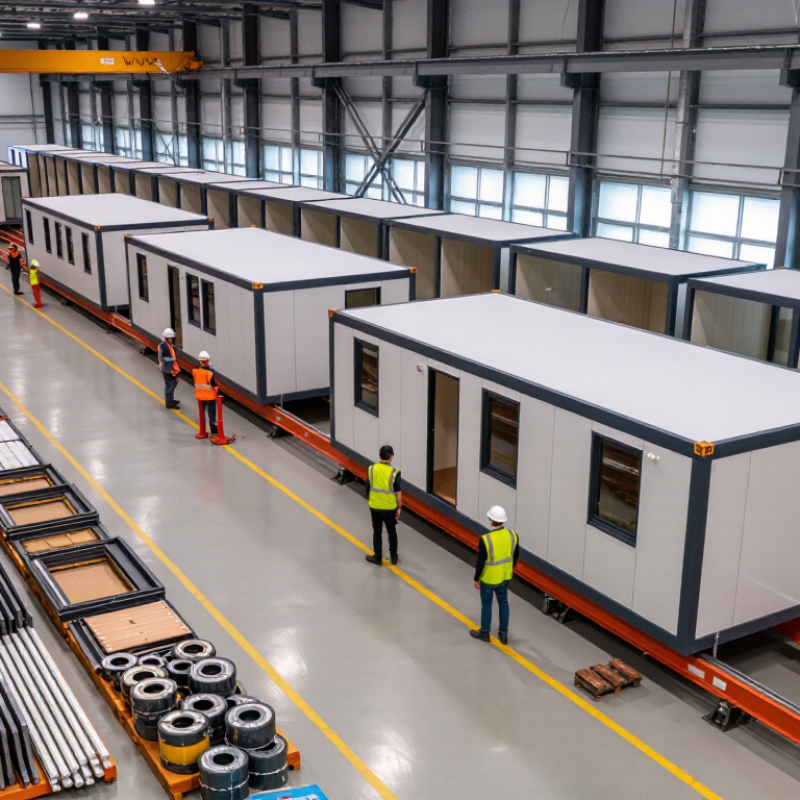
Building systems affect both design flexibility and site work. Volumetric modules arrive as three-dimensional room sections, while panelized systems are assembled from walls, floors, or roofs. Hybrid systems combine both approaches. Request drawings showing how joints, service routes, and weather barriers are handled. Production capacity needs equally specific evidence: factory lines, shifts, current backlog, and typical output for a project of similar size. Ask how quality is checked when output increases. A monthly capacity figure can look impressive, yet say little about your delivery window. Compare the stated schedule with available transport, storage, and installation crews. One detail is easy to overlook: a fast factory cannot compensate for incomplete design information or delayed approvals. A comparison may still leave uncertainty, so record assumptions and confirm them before relying on a quoted schedule.
Evaluate Quality Standards, Certifications, and Customization Options
When comparing modular building manufacturers, examine how quality is controlled at each production stage. Ask for inspection records covering steel or timber framing, insulation, moisture protection, and electrical systems. A clean sample wall is useful, but a dated production checklist tells you more. Check whether stated certifications apply to the factory, the product, or a specific project. Confirm the issuing body, validity dates, and relevant building requirements with your project team.
The labels can be confusing.
Customization needs the same careful review. Request drawings that show room dimensions, window positions, service routes, and connection points before approving a layout. Then ask how requested changes affect testing, delivery dates, and costs. A manufacturer should explain which options are standard and which require engineering review. For example, moving a bathroom wall may alter plumbing runs and transport dimensions.
Small change, real consequences.
Compare written specifications, not just attractive renderings, and record any agreed tolerances. Factory visits or video walk-throughs can reveal how materials are stored and how defects are logged. Still, one visit cannot prove consistent performance. Ask how issues are tracked after installation, and note where answers feel vague.
I would not treat a polished brochure as evidence.
Compare Pricing, Delivery Timelines, and After-Sales Support
How to Compare Top Modular Building Manufacturers?
Compare pricing, delivery timelines, and after-sales support
A low quote can hide costly gaps. Compare itemized proposals for design, transport, foundations, crane work, utility connections, and site finishing. Check what counts as a variation, and ask for payment milestones tied to measurable progress. McKinsey’s 2019 report, Modular construction: From projects to products, says modular methods could cut project timelines by 20–50% in suitable conditions. That is a potential, not a promise. Ask manufacturers to show a project schedule with factory production, shipping, and on-site installation separated. A delivery date without these stages tells you little.
After-sales support matters once the modules are occupied. Confirm warranty coverage, response times, spare-part availability, and who handles defects after installation. Ask for a sample service record, not just a verbal assurance. Small details matter. A delayed replacement panel can disrupt a finished room. Comparing support is imperfect, too; contract language may not reveal how quickly teams actually respond.
Tips: Request a written comparison using the same building specifications. Check lead-time assumptions, exclusions, and service commitments side by side. Ask what happens if a shipment arrives damaged or site access changes. Keep the answers in writing. I would still leave schedule buffer; weather and site readiness can undo a neat plan.
How to Compare Top Modular Building Manufacturers? — Compare Pricing, Delivery Timelines, and After-Sales Support
| Comparison Factor |
Standardized Volumetric Modular |
Custom Volumetric Modular |
Panelized Building System |
| Typical project fit |
Repeatable layouts such as workforce housing, classrooms, or simple residential buildings. |
Projects that need more design flexibility while retaining factory-built modules. |
Projects where wall, floor, or roof panels are factory-made and assembled on site. |
| Indicative U.S. project cost |
Approximately $100–$250 per gross building square foot, installed. |
Approximately $150–$350+ per gross building square foot, installed. |
Approximately $80–$200 per gross building square foot, installed. |
| What can change the price? |
Finish level, number of units, transport distance, crane access, foundation, utility connections, and site work. |
Custom engineering, unusual dimensions, upgraded finishes, transport constraints, foundation, and site work. |
Panel material, design complexity, local labor, weather protection, foundation, and site work. |
| Typical planning timeline |
About 6–12 months from design coordination to occupancy for a straightforward project. |
About 8–18 months, allowing more time for design, engineering, and approvals. |
About 6–14 months; site assembly and local construction sequencing can affect the schedule. |
| Factory production allowance |
Often around 8–16 weeks after approved drawings and release to production. |
Often around 12–24 weeks after approved drawings and release to production. |
Panel fabrication may take roughly 4–12 weeks after approved shop drawings. |
| After-sales support to compare |
Ask who handles module defects, installation issues, replacement parts, and warranty claims. |
Confirm whether support covers custom components, finish defects, and coordination between trades. |
Clarify responsibility for panel fit, weatherproofing, site assembly, and damaged components. |
| Contract terms to verify |
Written warranty scope and duration, service request process, response targets, exclusions, and escalation contact. |
Written warranty scope for both standard and custom items, response targets, repair responsibility, and exclusions. |
Written allocation of responsibility between panel supplier, installer, and general contractor, including repair procedures. |
| Best comparison question |
Does the quoted price include delivery, crane setting, connections, finishes, and site work? |
Which design changes affect price or schedule, and when is the final price fixed? |
Who supplies and installs each building component, and what work remains the site contractor’s responsibility? |
|
Planning ranges are broad, indicative U.S. market estimates—not verified quotes or guaranteed schedules for individual manufacturers. Costs and timelines vary by location, building size, code requirements, site conditions, finishes, transport, and scope. Compare itemized bids on the same scope, and confirm warranty and service commitments in writing.
|
Verify Project Experience and Apply a Consistent Selection Method
Comparing modular building manufacturers starts with evidence, not polished renderings. Ask for three completed projects that match your building type, climate, and delivery scale. Request dates, floor area, scope, and a client contact. Then check whether factory records, delivery logs, and site photos support the story. Ask for proof. A finished lobby may look convincing, while concealed joints or late replacements reveal more about execution.
Use a consistent scorecard for every manufacturer. Rate comparable criteria: relevant project experience, design coordination, quality controls, production capacity, logistics, and after-sales support. Ask each team the same questions, and record evidence beside each score. McKinsey’s 2019 modular-construction report estimates that modular methods can reduce project timelines by 20–50% and costs by up to 20%. These are potential gains, not guarantees; site access, design changes, and transport can erode them. Details matter.
Visit a factory if possible. Watch how components are labeled, protected, and checked before dispatch. Review a sample inspection record and ask how defects are tracked through correction. Speak with past clients about schedule changes, not only final handover. My own scorecards can look more precise than the evidence deserves, especially when references are selective. Mark unknowns plainly, and avoid turning missing data into a favorable score. That small discipline makes comparisons fairer and easier to defend.
Conclusion
Choosing a modular building partner begins with a clear definition of the project: its intended use, size, site conditions, performance needs, budget, and schedule. With those requirements in place, compare manufacturers by the building systems they offer, the types of projects they serve, and their production capacity. Understanding how to compare modular building manufacturers also means looking beyond initial cost. Review quality processes, relevant certifications, customization options, delivery estimates, installation coordination, and the availability of support after handover.
A consistent evaluation method makes the decision more reliable. Ask each manufacturer for comparable information, such as project references, sample specifications, production timelines, and a detailed breakdown of costs and services. Check whether their experience matches the scale and complexity of your project, and clarify how changes or delays would be handled. Weigh each option against the same criteria rather than relying on a single headline price. This structured comparison can help identify a manufacturer that fits your practical requirements and can deliver a suitable building with clear expectations.

 Nova Build