Are China modular steel buildings cheaper? The honest answer is: sometimes, but not automatically. A factory price can look attractive beside a conventional construction quote. Yet that figure may exclude shipping, customs, site preparation, crane hire, local assembly, and interior finishes. A low price on paper can grow quickly.
Ryan E. Smith, a professor and offsite-construction expert at the University of Southern California, has emphasized that offsite building depends on coordinated design and delivery, not factory production alone. That distinction matters when comparing Chinese steel modules with traditional buildings. Savings are more plausible when the design is standardized, production runs are large, and transport routes are practical. A custom layout, a remote site, or late design changes can erase them.
Look beyond the unit price. Compare the same scope, specifications, and completion date. Check steel grades, insulation, fire protection, corrosion treatment, connection details, and warranty terms. Ask who handles unloading and installation, and whether drawings match local site conditions. A delay at the port or a mismatch in foundations can leave expensive modules waiting on trucks.
There is no single reliable percentage. Regional labor rates, freight costs, exchange rates, project scale, and supplier experience all affect the result. And yes, estimates can still be wrong. A careful comparison should use itemized, current quotations and include contingency for overlooked work. The real question is not only “are modular steel buildings cheaper than traditional buildings,” but cheaper for this project, at this location, and to this specification.
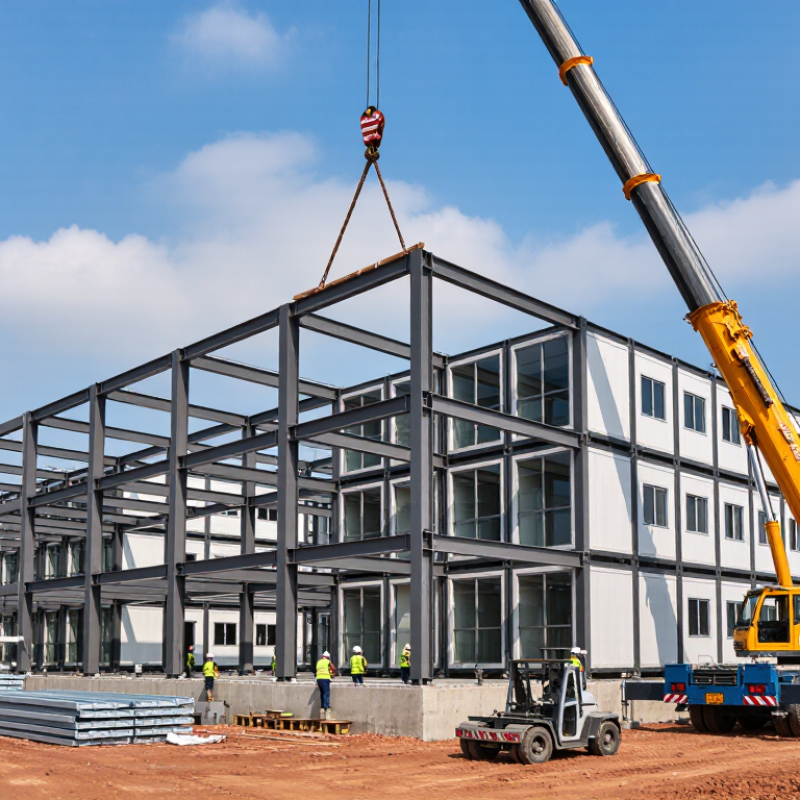
Are China Modular Steel Buildings Cheaper?
What Defines a China-Made Modular Steel Building?
A China-made modular steel building is defined by where its modules are fabricated, not by the seller’s address. The term should specify which parts are made there: the main frame, wall panels, floors, or service runs. Some projects ship only steel frames; others arrive as fitted modules. That difference affects freight, site labor, and what “complete” means. Ask for a component schedule and a written statement of manufacturing locations.
China’s manufacturing scale is relevant, but it is not a quality certificate. The World Steel Association’s World Steel in Figures 2024 reports that China produced 1,019.1 million tonnes of crude steel in 2023. This indicates broad material capacity, not the grade or traceability of a particular building. McKinsey’s 2019 modular-construction report says modular methods may shorten project schedules by 20–50%. Actual results depend on design repetition, transport, and site readiness.
Tips: Match steel mill certificates to member markings. Request weld-inspection records, coating-thickness readings, and dimensional checks. Confirm who handles local engineering and commissioning. Small gaps matter. “Made in China” alone verifies none of these.
A Chinese modular steel building may show a lower factory price than local construction, but the quote rarely covers the whole project. It may include design, steel fabrication, and factory assembly, while foundations, transport, cranes, utility connections, and site labor remain separate. A container arriving at port is not a finished building. Those costs vary with distance, site access, building size, and local requirements.
McKinsey & Company’s 2019 report, Modular construction: From projects to products, says modular methods can cut construction time by 20–50% and costs by up to 20%. These figures describe modular construction broadly, not a guaranteed saving for buildings made in China.
Not always. Ask bidders to price the same scope, including packing, shipping, installation, and contingencies. Then compare the landed, usable building with a local contractor’s complete bid. Factory production can reduce weather delays and material waste, but design changes after production starts may be costly. Even a careful estimate can miss port delays or extra crane hours. That is the part worth checking twice.
A modular steel building from China may have a lower factory price, but the delivered, installed cost is what matters. Ocean freight changes with route, season, container availability, and port congestion. UNCTAD’s Review of Maritime Transport 2024 describes sharp freight-rate increases amid shipping disruptions. That volatility matters. A quote should identify ocean transport, insurance, port handling, customs brokerage, and inland trucking separately. A large module may also need special transport or lifting equipment, adding costs that a container estimate misses.
Tariffs depend on the product’s customs classification and country of origin. A complete building kit may contain structural frames, panels, and fittings with different classifications. Check the applicable tariff schedule before comparing supplier prices; don’t assume one rate covers every component. Duties are only part of the border bill. Storage, inspection, and delayed-clearance charges can add up if paperwork or delivery timing is wrong.
Installation has its own price tag. The U.S. Bureau of Labor Statistics reported a median annual wage of $44,310 for construction laborers in May 2023, but wages alone do not represent a contractor’s total charge. Crews may need cranes, rigging, prepared foundations, local connections, and extra time for fit-up. Ask for an itemized installation scope and confirm who pays for site preparation. Small omissions matter. A cheaper kit can become expensive once it reaches the site.
Are China Modular Steel Buildings Cheaper?
China-made modular steel buildings may appear cheaper on a factory quote, but specifications determine whether savings hold. McKinsey’s 2019 industry report, Modular construction: From projects to products, estimated that modular construction could reduce project costs by up to 20% and schedules by 20–50%. These are potential gains, not China-specific guarantees. Cheap quote, maybe.
Quality requirements add real costs. For projects governed by China’s GB 51231-2016 technical standard for assembled steel buildings, buyers should define structural performance, fabrication tolerances, and inspection records early. Higher fire-resistance ratings, seismic detailing, corrosion protection, and insulation can require extra materials and factory work. Weld documentation and coating-thickness checks also take time. Small details matter.
Project conditions matter just as much. A building with repeated room layouts is usually easier to manufacture efficiently than one with varied spans or complex connections. Remote sites may need special transport, lifting equipment, or extra installation crews. Those costs can erase factory savings. Ask suppliers to separate fabrication, packing, freight, erection, and inspection in their quotations. Compare the same drawings and acceptance criteria, not just the headline price. I would still leave room for contingency; early estimates often miss site access and interface work.
| Cost Factor | Lower-Cost Specification | Higher-Requirement Specification | Indicative Budget Effect | Why It Changes the Price |
|---|---|---|---|---|
| Structural design and local codes | Standard design for a simple, low-rise building in a mild design environment | Project-specific calculations and review for local wind, snow, seismic, and building-code requirements | Often adds several percentage points to the project budget | Engineering, connection design, documentation, and revisions may be required before local approval. |
| Steel quantity and grade | Member sizes and steel grade selected for the stated loads and spans | Heavier members, higher specified material properties, or additional bracing where engineering requires them | Can add roughly 5–15% to the structural package in affected designs | More steel increases material, fabrication, handling, and freight weight. |
| Fire protection | No added fire-resistance system where the approved design permits it | Specified fire-resistant coatings, boards, or other approved protection for structural members | May add approximately 3–10% or more, depending on the required rating and coverage | The system, preparation, application, inspection, and certification add cost. |
| Thermal and acoustic performance | Basic envelope suitable for a non-conditioned or lightly conditioned use | Higher insulation, thermal-bridge detailing, air sealing, and acoustic build-ups | Can add about 5–20% to the envelope scope | Performance depends on the full wall and roof assembly, not just the steel frame. |
| Corrosion protection | Coating system selected for a mild, dry exposure and normal maintenance access | More durable coating or galvanizing specified for harsher or coastal exposure | Typically a modest initial premium; highly dependent on exposure and system | Surface preparation, coating thickness, galvanizing, and inspection affect cost and service life. |
| Quality assurance and records | Standard factory inspection and routine material records | Project-specific inspection plans, traceability, test records, and third-party checks where required | Often adds a low single-digit percentage to the relevant supply scope | Inspection, documentation, sampling, and independent verification require time and resources. |
| Shipping, duties, and delivery terms | Price covers the stated factory or port scope only | Delivered scope includes ocean freight, insurance, customs charges, inland transport, and handling as applicable | Varies substantially by destination, shipment size, and delivery term | A low factory price is not directly comparable with a delivered or installed price. |
| Foundations and installation | Factory-supplied building package; foundations and local erection are excluded | Site-specific foundations, cranes, local labor, connections, and installation are included | Can materially increase the total project cost | Ground conditions, access, local labor rates, and site logistics vary by project. |
Cost effects are broad planning indications, not a standardized market survey or a guaranteed quotation. Percentages are not additive: requirements can overlap, and the final cost depends on location, building size, design, scope, shipping terms, and applicable codes. Compare like-for-like quotations that clearly state inclusions and exclusions.
China-made modular steel buildings may have a lower purchase price, but lifecycle cost is the better test. Compare delivered, installed, and commissioned costs—not the factory quote alone. Include freight, crane time, foundations, corrosion protection, inspections, repairs, energy, and eventual replacement. Small omissions add up.
McKinsey’s 2019 report, Modular Construction: From Projects to Products, estimates potential project cost reductions of up to 20% and shorter delivery times of up to 50%. These are potential gains, not guaranteed lifetime savings.
Tips: Request a 20- or 30-year cost schedule covering maintenance, component replacements, and expected energy use. Compare it with a conventional build using the same floor area, occupancy, climate, and service life. Ask for itemized freight and installation assumptions; a neat spreadsheet can still miss site-specific costs.
Steel can be durable, but coatings need inspection, especially near salt air or industrial pollution. Faster construction may reduce financing and site-overhead costs, yet those savings depend on delivery timing and local installation capacity.
Check warranty limits and confirm which party handles repairs. A low initial price is useful, but it does not answer the harder question: what will the building cost to operate and maintain over time?
It means some or all modules were fabricated in China. The seller’s location does not define it. Ask where the frame, panels, floors, and service runs were made.
No. Large-scale production does not prove the quality of a specific building. Check material certificates, member markings, weld records, coating thickness, and measurements. Details matter.
It should list each included part and where it was made. A shipment may contain only steel frames, while another arrives as fitted modules. “Complete” can mean different things.
The factory price may be lower, but it often covers only design, fabrication, and assembly. Foundations, shipping, cranes, utilities, and site labor may cost extra. Compare full project costs.
It may shorten schedules by 20–50% and reduce costs by up to 20%, according to broad industry reporting. Those figures are not guarantees. Site readiness and repeated designs matter.
Check packing, freight, port handling, installation, and contingency costs. Crane hours and difficult site access can add expense. A container at port is not a finished building.
Yes. Changes can require rework or replacement parts. Confirm drawings and specifications before fabrication begins. Still, careful planning may miss something.
Ask both bidders to price the same scope, including delivery, installation, and site work. Compare the usable, installed building—not just the factory quote. Check assumptions twice.
China-made modular steel buildings can offer lower factory costs because components are produced in controlled settings with repeatable processes and efficient material use. However, the delivered price depends on more than manufacturing: shipping distance, freight handling, import duties where applicable, site access, foundations, local assembly labor, and equipment can all affect the project budget. Comparing a factory quotation with the cost of local construction alone may therefore give an incomplete picture.
To judge whether are modular steel buildings cheaper than traditional buildings, compare equivalent designs, specifications, and project requirements. Structural standards, insulation, finishes, durability expectations, and customization can change the upfront cost, while local approvals and installation conditions may add further expenses. A lifecycle comparison should also consider construction time, maintenance, energy use, and expected service life. Modular steel construction may provide savings in some projects, but the best value depends on the complete delivered and long-term cost.

Nova Build